الأعمال
Why Do Algorithms Ignore The Many And Worship The Few?
By Gagan Malik
10 دقيقة قراءة
Everyone in tech worships the funnel. Awareness, consideration, decision, retention, referral. You've seen that funnel slide in every strategy deck you've ever touched. It is the founding religion of modern marketing and, in short form video, it is a liability. There is no gentle staircase. There is only a gladiator pit where every video walks in and most die in three seconds. The true unit of strategy is not the campaign. It is the repeatable format that wins that reflex swipe. And right now the most ruthless version of that format is the elimination game, where one option survives and the other gets buried.
The $47,000 Launch Budget That Lost To A Phone Camera
Last year I was consulting a lifestyle product startup, freshly seeded, 90 days to prove traction before the next check. They signed off 32,000 dollars (about £25,000) on a full launch content strategy: brand film, product explainers, polished case studies. Then layered 15,000 dollars (about £11,800) in paid social on top. Meta, LinkedIn, pre-roll. The goal was 500,000 views in 30 days. While the agency was colour-grading the brand film, one of the junior designers on my team built a rapid fire elimination bracket on his phone. Ten product features head to head. Twenty-eight seconds. Zero cost. He posted it on a Tuesday without telling anyone.
By Friday it had 480,000 views. The paid campaign had generated 31,000 views across twelve videos at a cost-per-view that made the founder go very quiet on our next call. One data point is not a controlled trial. But when your zero-dollar organic post nearly hits the entire campaign target in four days, that is not luck. Data from thousands of YouTube Shorts shows that 50 to 60 percent of viewers drop off within the first three seconds, and on TikTok, videos that hold 70 to 85 percent retention past that window receive 2.2 times more total views than those that do not. Attention in short form is not bought through a media plan. It is won in the first three seconds or not at all. opus
Algorithms Hunt Outliers, Not Audiences
The algorithm is not a megaphone for your brand. It is a pattern recognition system that bets on statistical anomalies, and it does not care how much you spent on your brand guidelines.
Shortimize's 2026 analysis identifies what they call an Outlier Score: a video's views divided by an account's median views. A video pulling 140,000 views on an account that typically gets 20,000 is a 7x outlier. That is what triggers amplification. Gurkha Technology's hook research puts a number on the threshold: strong hooks achieve a 70 to 80 percent 'watched past three seconds' rate, which correlates with significantly higher algorithmic distribution. Their clearest example of such a hook is a simple binary 'X vs Y' setup. The inference, and it is an inference rather than a proven causal chain, is that the elimination bracket is purpose-built to spike that outlier behaviour repeatedly. Every new matchup resets the curiosity loop. The algorithm does not care about your brand narrative. It cares whether your format generates abnormal retention curves. shortimize
What If Your Comments Section Is Your Best Ad Budget?
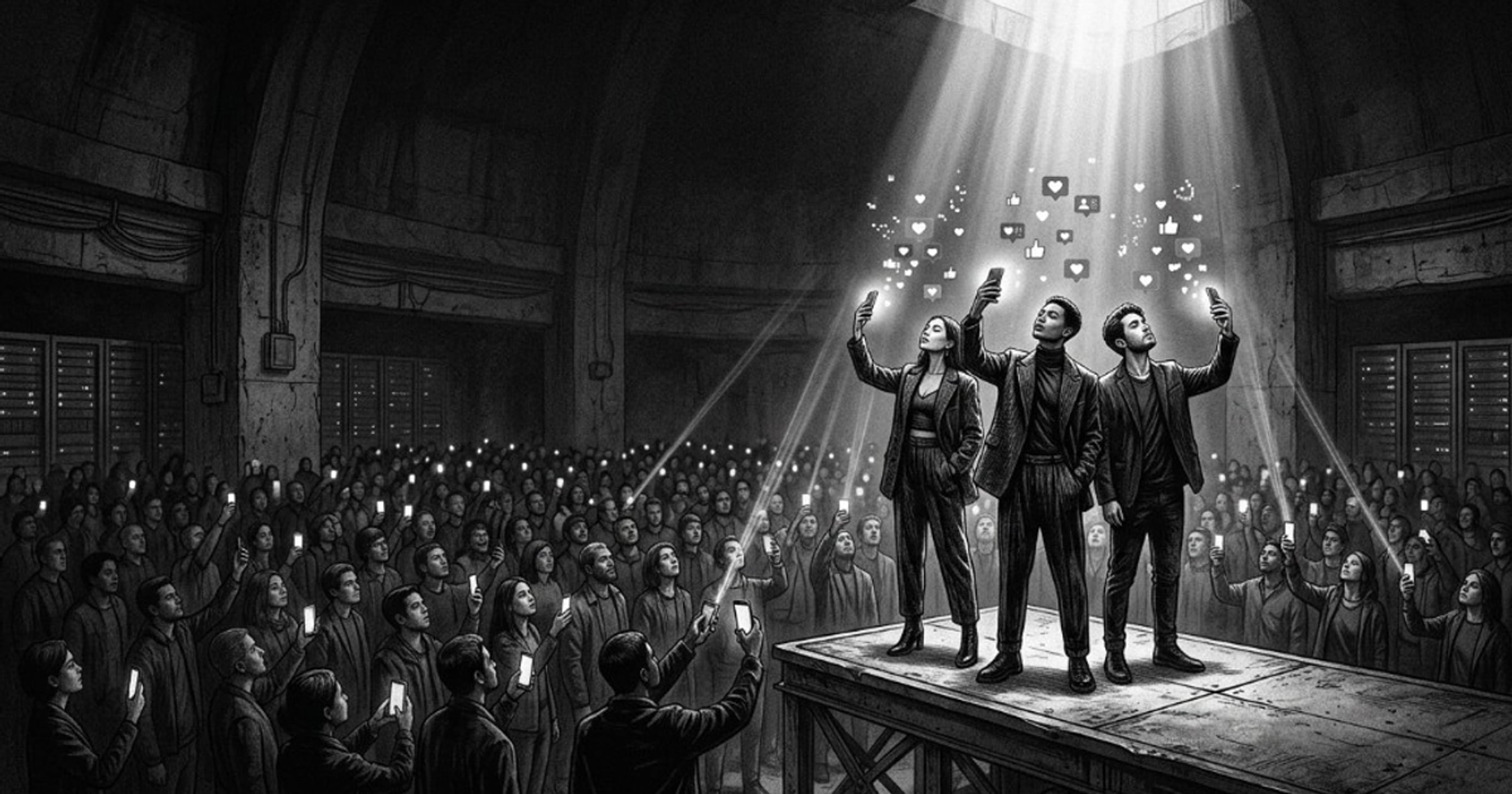
The elimination bracket grows your account by starting fights in your comments so you do not have to. The moment two options face off on screen, you manufacture winners and losers, and people cannot help themselves.
Short form performance research shows that videos designed to invite debate in their structure drive higher engagement rates, which in turn lifts platform distribution. That is a correlation, not proven causation, but it is consistent across multiple platform studies. Duolingo is the clearest proof of concept at scale. They built their entire TikTok presence on conflict, absurdist humour and combative skits pitting their owl mascot against every cultural rival it could find. Followers grew from 50,000 to over 10 million, with an 11 percent engagement rate against an industry average of 2 to 3 percent. Their philosophy was explicit: 'The comment section is our social brief'. Conflict invites comment. Comments signal engagement. Engagement signals distribution. Engagement is no longer a KPI. It is collateral damage. benchmarkemail
Formats Are Assets, Videos Are Tests
Your content roadmap is not a calendar. It is a format library, and most teams are spending serious money building the wrong one.
Shortimize's pattern framework is explicit: mine a format, run a ten-video sprint to validate it, keep only what consistently beats your baseline, and iterate from there. Structure is the durable asset. Individual videos are disposable test cases. Apply that logic to the elimination bracket and you can pressure-test ten variations across any niche in 14 days: software tools, pricing models, industry opinions, product features. The variables are hook line, opening visual and proof style. The underlying logic of 'one survives, one dies' stays constant. In short form, the company that owns the most repeatable, high-performing formats has a structural distribution advantage over the one burning budget on one-off campaigns. shortimize
Darwin, Not Don Draper
Think of this less like Mad Men and more like how winning tactical formations spread through professional football.
When a system proves it works at the highest level, every club in the league adopts a version of it within two seasons. The formation becomes the asset. The individual players running it are disposable test cases. The elimination bracket works exactly the same way. It is not a one-time trick. It is a replicable system that compounds. Every video you make in that format generates data, comments, and retention signals that make the next iteration sharper. By the time your competitor starts experimenting with the format, you have already run fifty versions and know exactly which variables convert. Tech teams keep trying to win with talent and budget. The bracket is a system. Systems beat talent at scale. gurkhatech
'But We're A Serious Brand'
The strongest objection is a fair one. Serious products are complex. B2B buyers run long decision cycles. You cannot explain a data platform, a medical device, or a fintech compliance stack through a TikTok elimination game. And if you try, you risk cheapening the very credibility your sales team spent years building. That is a legitimate concern, not a failure of imagination.
Here is the counter-example. Ryanair sells a high risk, heavily regulated, operationally complex service in one of the most scrutinised industries in Europe. They are not a lifestyle brand flogging hoodies. Yet their TikTok strategy is deliberately crude, combative and often absurd. Behind the memes, they run one of the most cost-disciplined operations on the continent with record passenger volumes to prove it. The content does not explain the complexity. It earns the first click. Depth lives downstream. You use the bracket to buy the attention. You use the sales call to justify the price. foryouadvertising
The Stakes
Short form platforms are now structurally rewarding elimination formats that generate outlier retention curves, visible conflict, and high comment velocity. The implication is that every dollar you spend producing slow, narrative-heavy content in 2026 is a dollar quietly transferred to the competitor who figured out the bracket six months before you did. Ignore this and you will not get a postmortem or a panel slot at a conference to explain what went wrong. You will just be gone. gurkhatech
هل نعمل معاً؟
اطّلع على الخطط أو اسأل سؤالاً.
المزيد في الأعمال
عرض الأرشيف


ابق على اطلاع
أضف هذا الرابط إلى قارئ RSS للحصول على المقالات والتحديثات الجديدة تلقائياً.